Community batteries program

Batteries are enabling the use of more renewable energy within our electricity networks. Community batteries can play a key role to support the use of more household generated solar energy in local neighbourhoods.

Community batteries help store extra solar power, so it doesn’t go to waste. When the sun is shining, solar panels on homes make more electricity than people need. This extra power is saved in the battery and used later when the sun isn’t out. These batteries enable communities to use more clean energy and make the electricity network more reliable.

About the program

We are proposing to install community batteries across the Darwin to Katherine regulated electricity network. The batteries will help people get more out of their solar energy and help keep the power supply stable.

Engaging with our community

We want to hear what people think about this project.

There will be meetings where the community and industry can share their thoughts:

  • Residential customer focus group – December 2024
  • Industry forum – April 2025
  • Impacted community engagement - date/s to be advised.

We will work with local councils, community groups, and emergency services to make sure batteries are installed in the best locations.

People can ask questions and share their thoughts throughout the project.

Deciding where to put a community battery

Many factors are considered when deciding the best location for a community battery.  These include:

Using advanced modelling data we identify optimal network locations.

Identify optimal network locations

Our planning engineers use advanced modelling data to analyse possible locations. This process considers network infrastructure and potential benefits for customers.

We work with land authorities to determine suitable community locations.

Select suitable community sites

Our planners and engineers work with land authorities and relevant Territory agencies to identify appropriate locations within the community.

We consult with the community before a final location is chosen.

Consult with the community

We consult with community stakeholders to gather information to ensure the most suitable locations are chosen.

Frequently asked questions

How does a community battery work?

When solar panels make more electricity than needed, the extra power goes into the battery instead of being wasted. Later, when the sun isn’t shining, the battery releases that stored energy into the power network for people to use it. This helps keep the power supply steady and reduces the need for extra generators.

What are the benefits of a community battery?

Community battery benefits include: storing extra solar energy so it can be used later; helping to reduce pollution by using more clean energy; reducing the number of power outages by helping to keep the network stable; making solar panels more useful by allowing more energy to be stored and used.

What will the batteries look like?

The batteries will come in various shapes and sizes depending on where they are located. They will range in size from a standard household refrigerator to the size of a shipping container. Batteries located on public land, such as parks, will be decorated to suit their location.

Are community batteries safe?

The batteries have fire safety systems, cooling systems, and regular check-ups to make sure they are safe. The batteries are built to Australian safety standards to prevent overheating or fires.

Do the batteries emit electromagnetic fields (EFMs)?

Everything that uses electricity creates small amounts of EMFs. This includes mobile phones, home appliances and powerlines. The batteries also give off low levels of EMFs.

Does Power and Water already have batteries installed?

As part of the Solar Energy Transformation Program (SETuP), we have battery energy storage systems (BESS) and solar arrays integrated with diesel power stations in Daly River and Titjikala. The use of BESS (with solar) has helped to stabilise the networks and significantly reduced diesel costs in these communities.

Will the batteries be noisy?

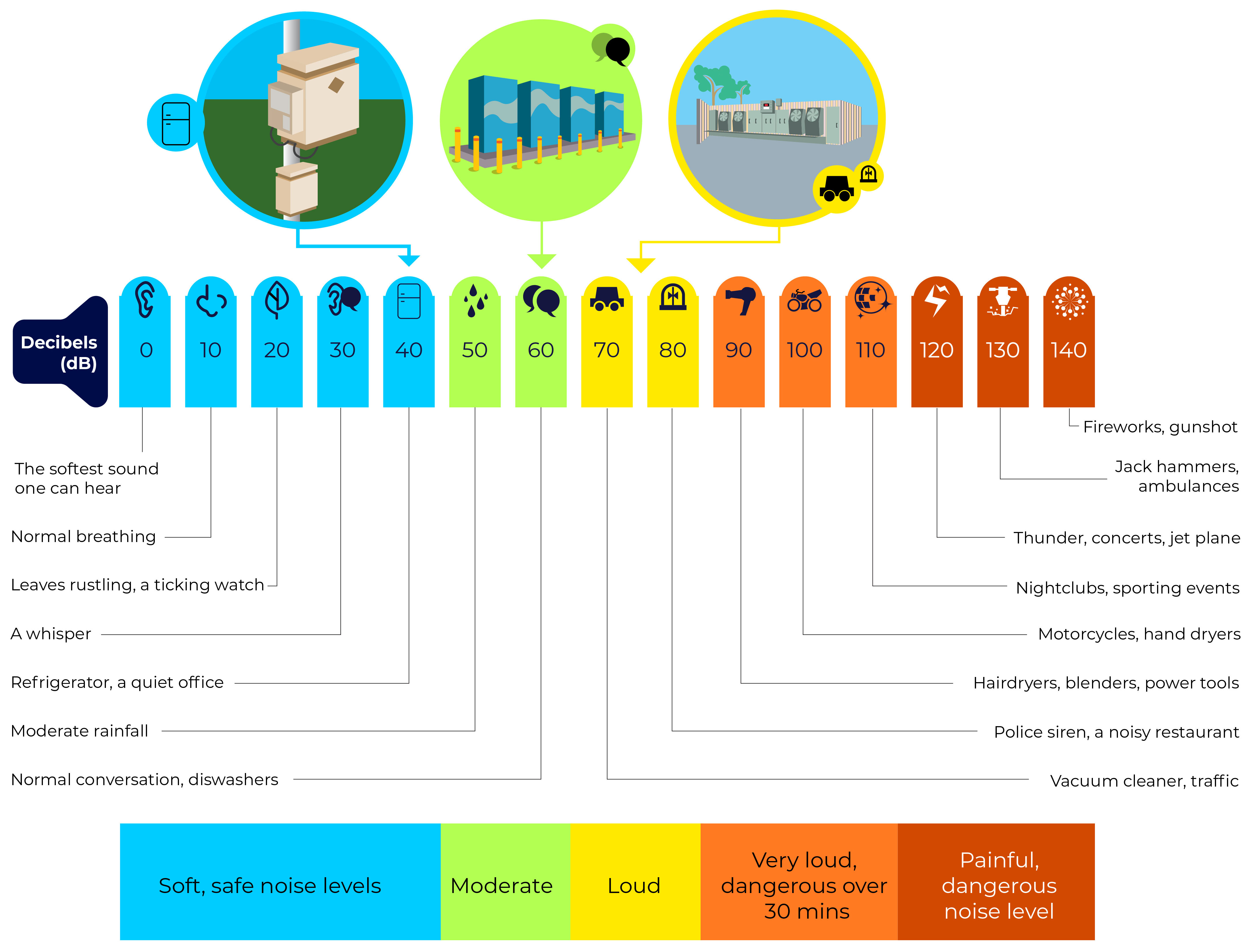
The batteries have a low ‘hum’, like a refrigerator or freezer that comes from the battery’s temperature control unit. That’s why we consider homes in the area when deciding on battery sites. All the batteries we install must comply with the Northern Territory Environmental Protection Authority’s noise guidelines.

The diagram illustrates 3 points: Small pole top batteries emit a sound of about 40 decibels, similar to a refrigerator or a quiet office. This is considered to be in the soft, safe noise level range; Batteries in community spaces emit a sound of about 60 decibels, similar to the volume of a normal conversation or a dishwasher. This is considered to be in the moderate noise range; Large batteries in a substation emit a sound of between 70 and 80 decibels, between a vacuum cleaner or traffic and a Police siren or a noisy restaurant. This is considered to be in the loud noise range.

Want to learn more?

If you have questions, you can email our project team at futurenetworks.pwc@powerwater.com.au.

We acknowledge Aboriginal and Torres Strait Islander peoples as the traditional custodians of this land and are committed to reconciliation among all Australians.

Learn about our vision for reconciliation